
01Describe one representative shift
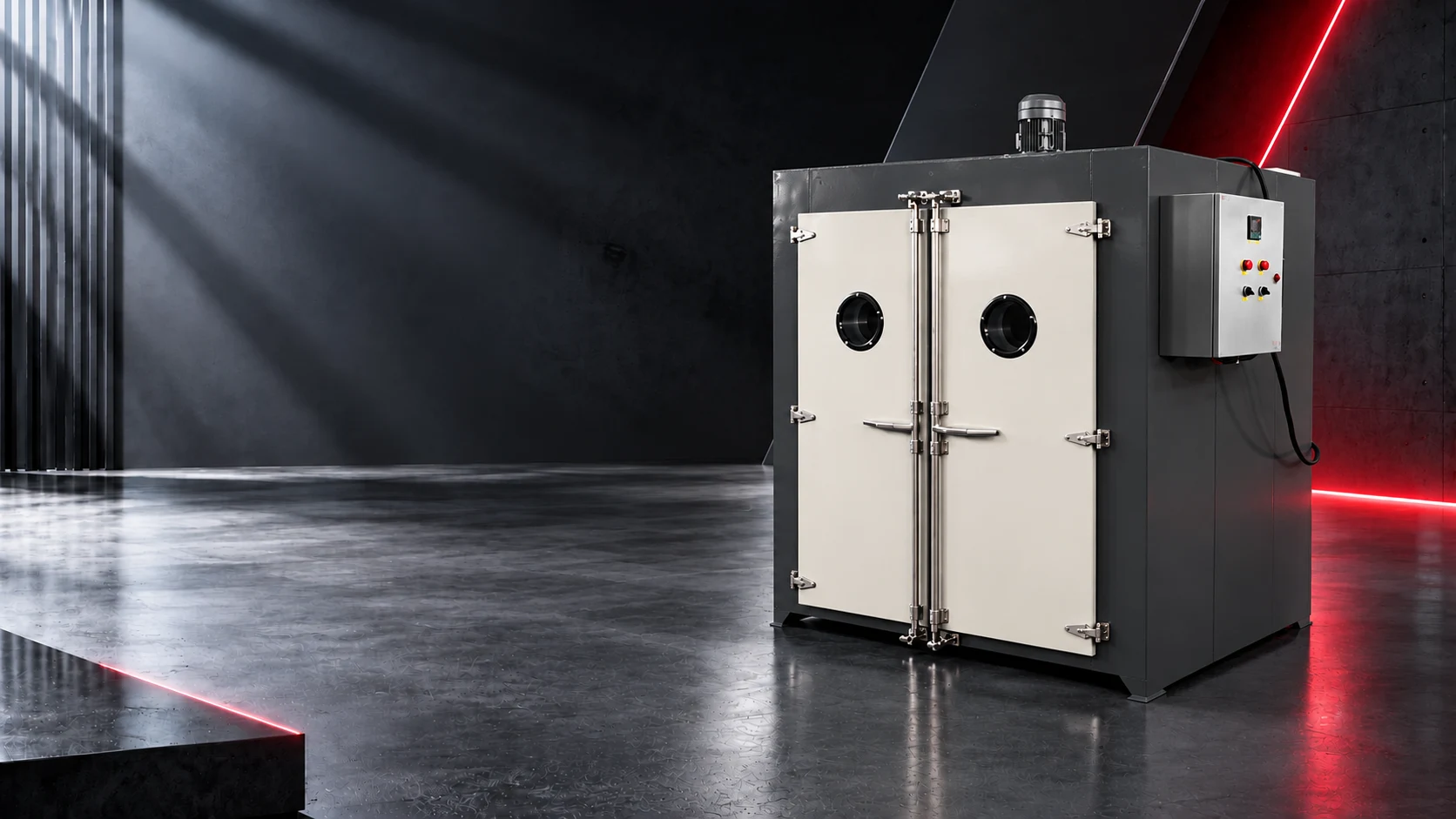
List each part’s dimensions, mass, required product-temperature profile and quantity. Identify products that can share a qualified recipe. Similar-looking parts are not automatically suitable for the same load.
Varying lots and recipes can favor a batch arrangement. Stable products and a sustained feed justify reviewing a conveyor arrangement. Verify actual loading and product response for either option.
02Compare the complete installation
| Item | Batch oven | Conveyor oven |
|---|---|---|
| Handling | Shelves, trays or truck loaded as a batch | Support, loading pattern and transfers |
| Process time | Separate heat-up, soak, cooling and handling | Speed, heated residence and zone sequence |
| Changeover | Recipe, fixture and temperature-change time | Line clearance, transition product and speed changes |
| Floor space | Door operation, truck routes and hot-part staging | Loading, cooling, access and adjacent equipment |
03Include cooling and handling in capacity
Consider an illustrative batch with 35 minutes of heat-up, 25 minutes of soak, 15 minutes of in-oven cooling and 10 minutes of handling. The occupancy cycle is 85 minutes. At 100 parts per batch, ideal long-run average capacity is 100 × 60 / 85 = 70.6 parts/hour, not the capacity calculated from soak time alone.
External cooling changes handling, fixtures and product-temperature conditions. Review those changes before removing cooling from the occupancy calculation. The example does not specify a machine rating.
04Give competing proposals the same duty
Use the same parts, shift demand, temperature requirement, acceptance criteria and operating hours when comparing footprint, labor, maintenance and energy. Otherwise, two stated capacities may cover different process boundaries.
Review the batch arrangements and conveyor supports before preparing the inquiry.
↗Sources and scope
References support the design principles discussed here. Product-specific limits must come from the equipment instructions and process specification. Illustrative values are not purchase specifications.