01Identify the element and the failure cause
Record the heater model, element number, voltage and power rating, wiring arrangement, sheath material, insertion length and terminal construction. Compare the original drawing, spare-parts list and manufacturer requirements; similar appearance does not guarantee matching electrical or thermal design.
Also investigate the failure cause, such as dry firing, low flow, scale, corrosion, loose termination, supply problems or control failure. A replacement may fail again if the root cause remains.
02Isolate the equipment under the site procedure
Before maintenance, isolate the power under the site procedure, apply lockout/tagout, verify absence of voltage, and allow the equipment to cool, depressurize and drain to a safe condition. Follow the relevant permit and task-specific procedures for hazardous media, confined spaces or classified areas.
If the element is integrated with a pressure boundary or Ex construction, removal and installation should be performed by qualified and authorized personnel, protecting sealing surfaces, threads and flamepaths as required by the manufacturer.
03Match the replacement to the equipment design
- Rated voltage, power, phase and wiring arrangement
- Sheath material, diameter, heated length and insertion depth
- Flange, threaded or sealing arrangement and design pressure
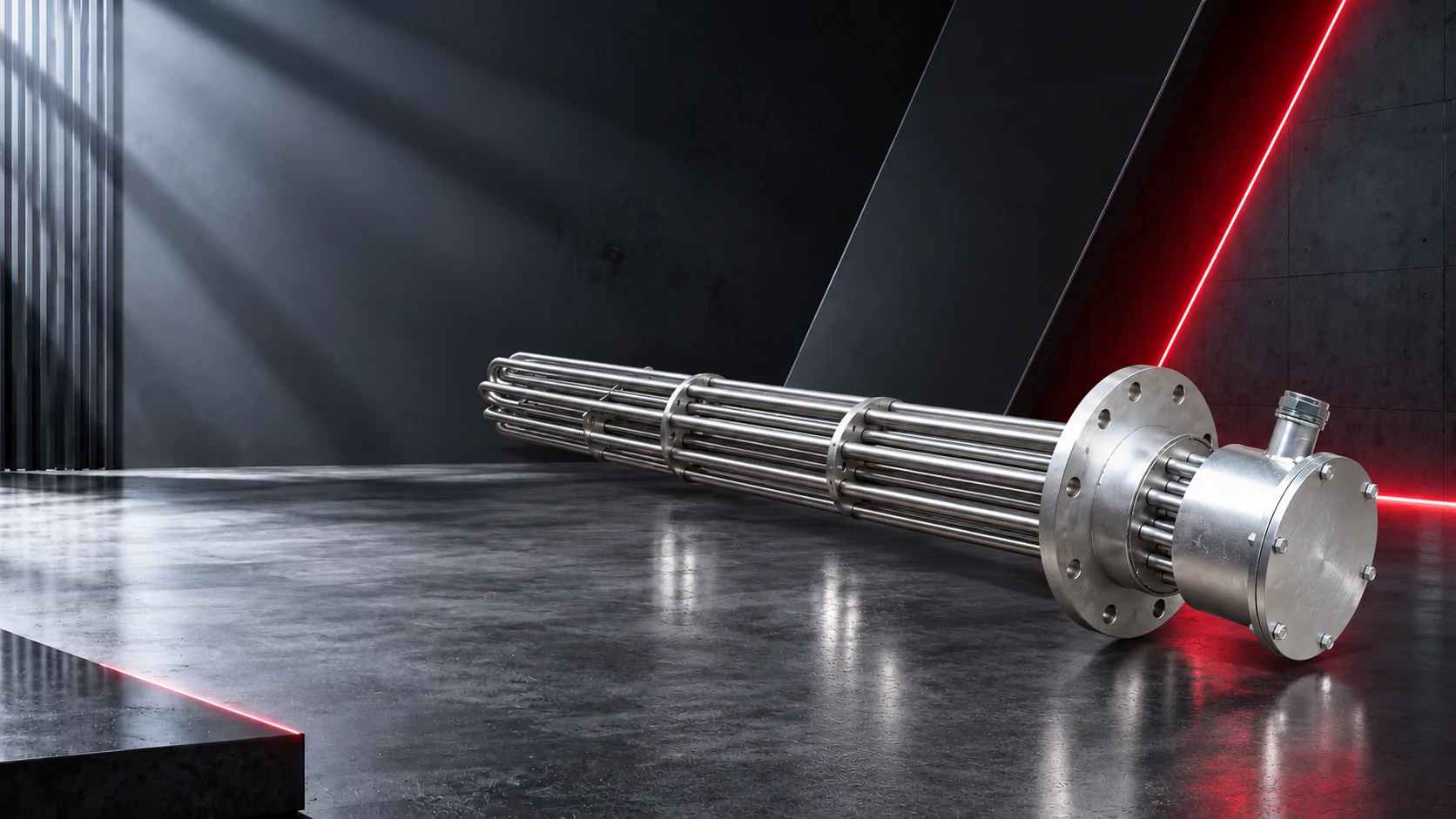
- Terminal enclosure, ingress protection and approval scope
- Watt density, medium velocity and control protections
Do not increase power alone to solve slow heating. A change in rating or watt density requires review of medium temperature, sheath temperature, supply capacity and protective settings.
04Use an acceptance checklist after reassembly
Check connections, fasteners, seals, grounding and cable entries; test insulation resistance, circuit resistance and protective devices under the maintenance plan. After restoring the process, check for leaks and confirm flow before returning to service according to the equipment instructions.
Keep the failed-part findings, replacement batch and test results. Obtain design and compliance review before changing construction, wiring or certification configuration; a field modification is not automatically an equivalent replacement.