01Start with the fluid, not the heater name
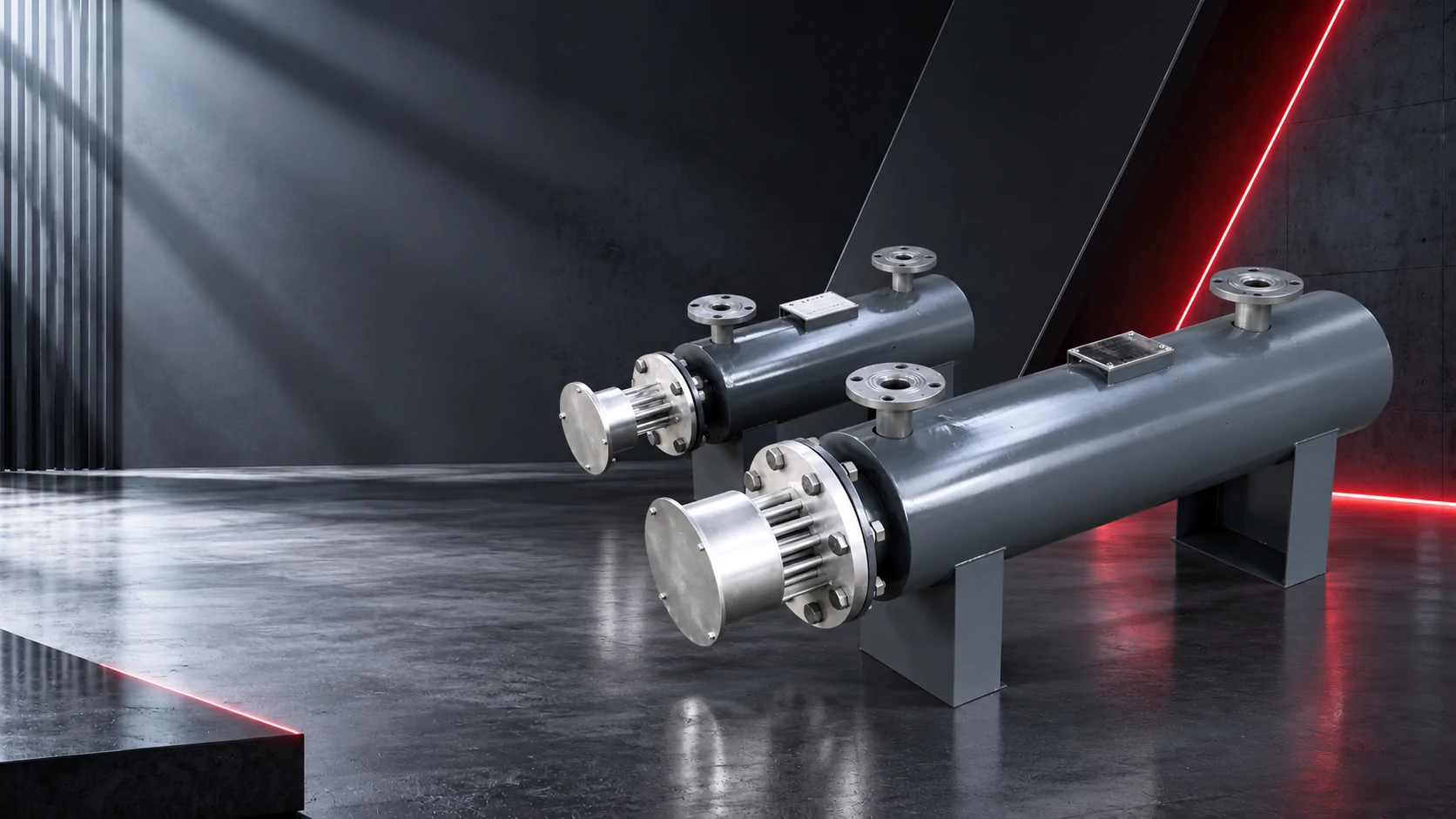
A circulation or pipeline heater transfers heat to a moving process stream inside a pressure-rated flow path. Common duties include water, thermal oil, fuel and lubricating oils, clean process liquids, compressed air, nitrogen and other process gases. The heater must be engineered for the actual fluid and operating conditions; a generic heater is not automatically suitable for every service.
Provide the fluid name and, where relevant, composition, concentration, contaminants, viscosity range, phase and safety data. Trade names alone may not reveal chlorides, solvents, suspended solids or other constituents that affect materials and fouling.
02Match materials to chemistry and temperature
Review both the pressure vessel or flow body and the element sheath, plus seals, flange materials and wetted sensors. Stainless grades such as 304 or 316L are not universal corrosion solutions. Chlorides, acids, caustics, sulfur compounds and elevated temperature can change the corrosion picture. For uncertain or aggressive service, use fluid-specific compatibility data and a qualified materials review.
For gases, consider oxidation, maximum sheath temperature, pressure and flow distribution. For viscous liquids, stagnant zones and local film temperature matter. Suspended solids or deposits can insulate the element and cause local overheating even when the bulk outlet temperature appears normal.
03Check the duty and operating window
Give minimum, normal and maximum flow; inlet and target outlet temperature; operating and design pressure; startup temperature; and required heat-up or recovery time. For continuous flow without phase change, a first estimate is P (kW) = mass flow (kg/h) × specific heat (kJ/kg·K) × temperature rise (K) ÷ 3600, before losses and design allowances.
Also identify turndown, intermittent operation, flow interruption scenarios, hazardous-area classification, supply voltage and control requirements. Low flow, blocked flow or dry operation may require independent trips and a defined safe shutdown sequence.
04When direct heating is a poor fit
A direct pipeline heater may be unsuitable when the fluid attacks all practical wetted materials, contains deposits that cannot be managed, must not contact an element surface, or has operating conditions outside the approved pressure and temperature envelope. In those cases, an indirect heat exchanger, jacketed vessel or another heat-transfer method may be safer and easier to maintain.
A useful RFQ includes a process datasheet, fluid safety information, P&ID or connection sketch, flow range, temperatures, pressure, electrical supply, area classification and applicable codes. These inputs let the supplier review both thermal duty and mechanical design.